Ash on a flour sheet is not ash added to flour. It is the small mineral residue left after a flour sample is burned in a lab, reported as a percentage. A 0.55% figure means that a very small residue remains after the organic material burns away. The number can offer context about milling and the parts of the wheat kernel present, but it is not a pizza-quality score.
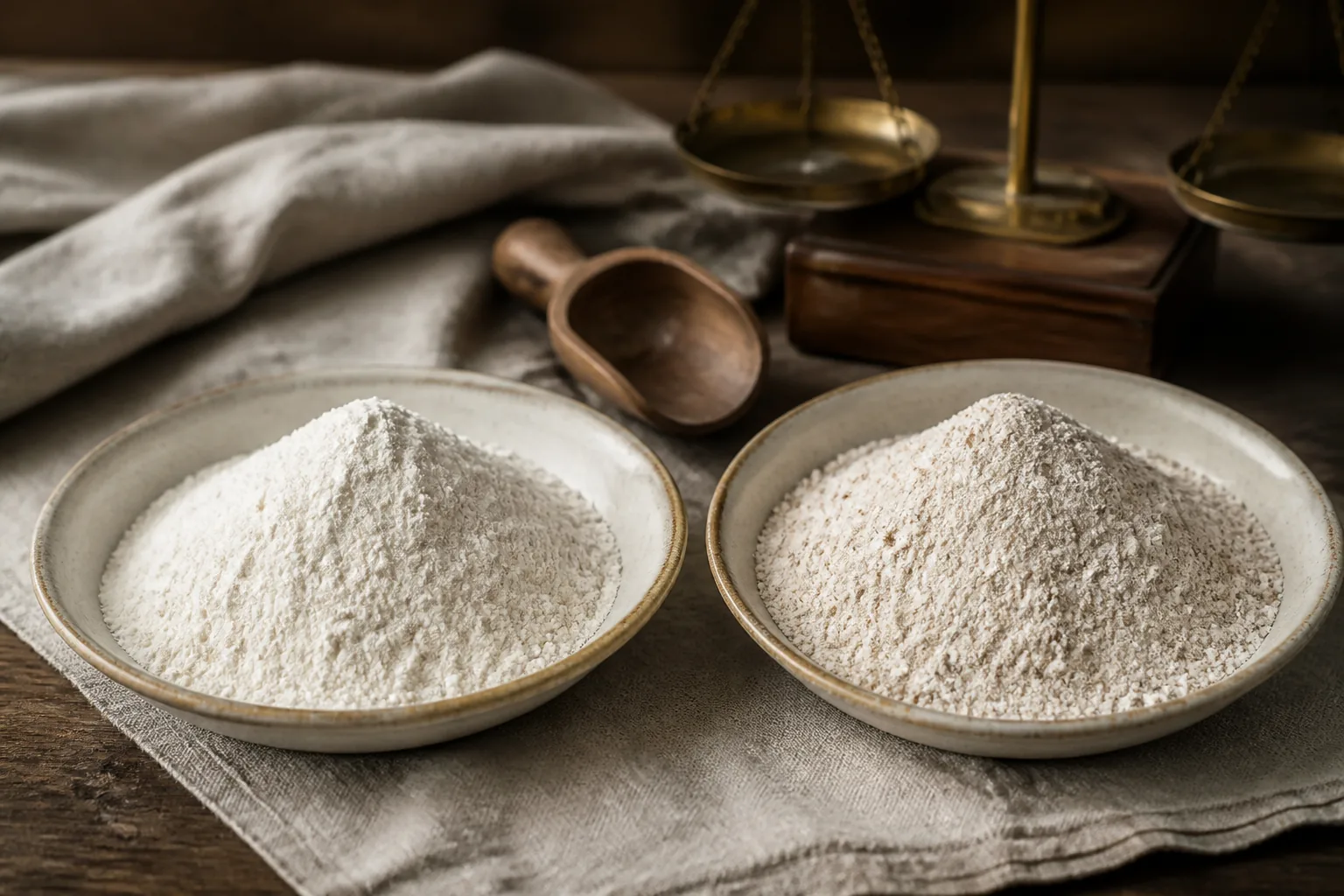
What the ash test measures
Most of flour burns away under the controlled conditions of an ash test. The mineral-rich remainder is weighed and expressed as a percentage of the original sample. Ash is therefore a description of the flour, not an ingredient list.
Why ash varies
The wheat kernel is not uniform. The refined centre, called the endosperm, generally contains less mineral material than layers nearer the outside. Milling can carry more or less of those outer layers into the finished flour.
That is why ash often gives context about refinement and extraction. Wheat, milling choices and the reporting basis still matter. An ash percentage is a useful clue beside a product description, not a shortcut around it.
Is higher ash better?
No. Higher and lower are not grades of flour quality. Ash does not tell you which flour will make the best pizza for your dough or oven.
Ask a more useful question: are these the same kind of flour, reported in the same way? If that is unclear, read the figures as useful background rather than a head-to-head result.
How to compare ash figures
Before putting two percentages side by side, ask:
- Are these the same kind of flour?
- Do the sources state the same moisture or dry-matter basis?
- Are the figures from current pages or sheets for the exact products?
If a product page does not state its reporting basis, you can still read its published ash percentage. It should not be treated as a precise like-for-like measurement against every other figure you find.
Examples of how manufacturers report ash, not a ranking
| Flour | Published ash figure | What the source tells you |
|---|---|---|
| King Arthur Type '00' | 0.54% | The reviewed product page gives the ash figure but does not state its reporting basis. |
| Central Milling Organic Type 00 Normal | 0.55% | The reviewed product page gives the ash figure but does not state its reporting basis. |
| King Arthur Special Patent | 0.50% +/- 0.03% | The product information sheet states a 14% moisture basis. |
The first two figures are close, but neither beats the other. Special Patent supplies more reporting context, not a direct substitute for the Type 00 flours.
Italian and US flour labels
An Italian type number and a US product name can come from different label systems, and published percentages can use different bases. That is why an Italian type number is not a direct conversion to a US flour label. The pizza flour types guide explains those label systems.
Use ash as context
Find the exact product sheet, read the ash figure and basis together, then use the number as context for the flour in front of you. Browse the pizza flour registry for more published examples and direct source links.