Protein is a useful first clue when you are choosing pizza flour. It describes a flour's potential to form the gluten network that gives dough structure, but it cannot supply a complete recipe. Start with the recipe or pizza you want to make, then check the protein printed for that exact bag. If the maker publishes a W value or specific pizza guidance, keep that information beside it.
Use a published percentage to narrow the field. Then read the rest of the flour's information before deciding.
What protein changes in pizza dough
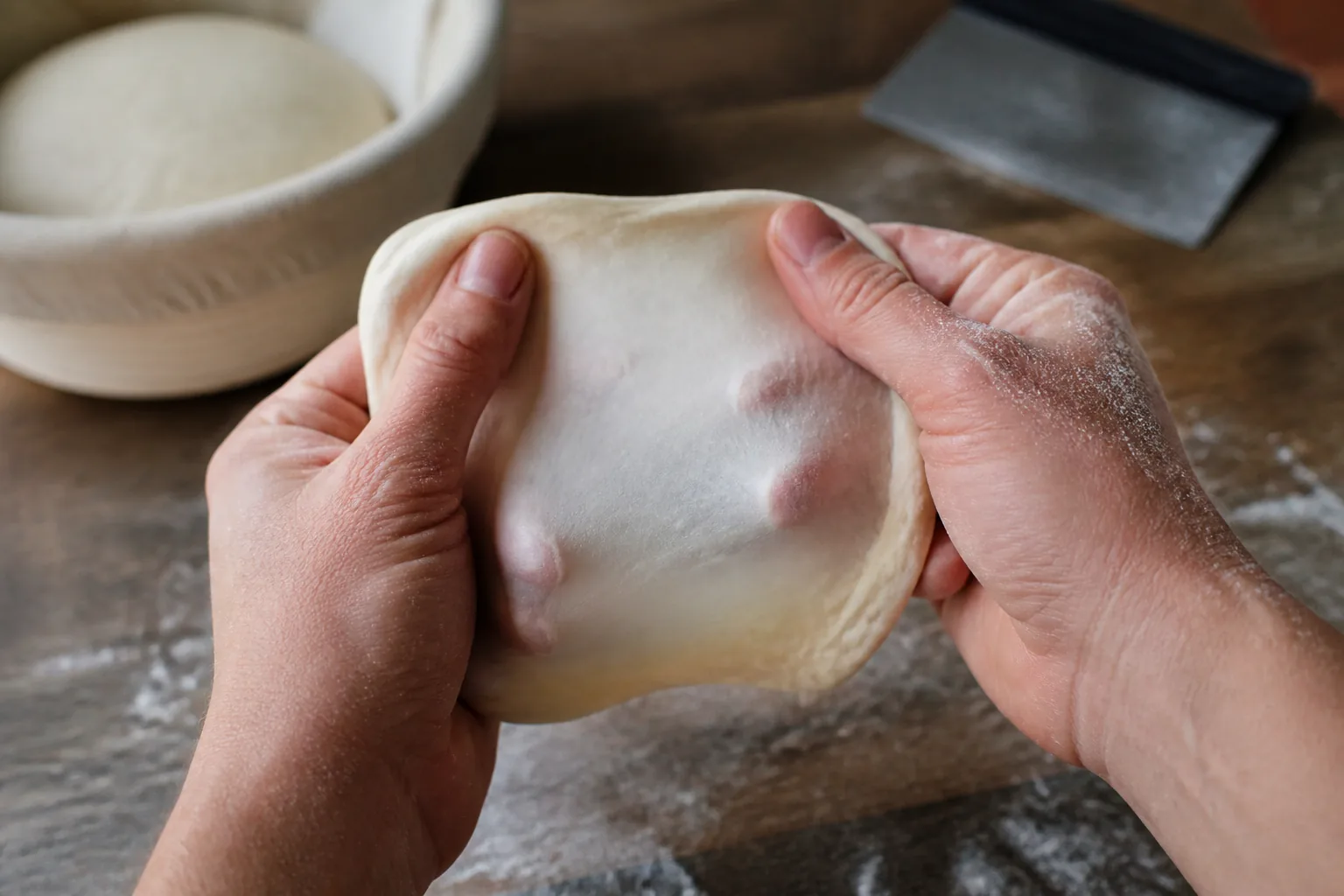
When wheat flour meets water and is mixed, some of its proteins join to form gluten. That network helps dough hold together and stretch instead of behaving like wet paste. King Arthur's explanation of bread flour versus all-purpose flour makes the basic relationship clear: its 12.7% bread flour has more protein than its 11.7% all-purpose flour, and the higher-protein flour can build a stronger gluten network.
Protein is one part of the picture. Two bags with the same stated protein can still be milled from different wheat, have different gluten characteristics, or be intended for different uses. Mixing, fermentation and the recipe matter too.
What percentage should you look for?
The useful percentage depends on the flour and the pizza plan. There is one formal, pizza-specific specification worth knowing, plus practical examples from flour makers. They are different kinds of guidance.
Useful starting points
| Context | Published protein figure | What it can tell you |
|---|---|---|
| AVPN-certified Neapolitan specification | 11.5 to 13.5 g%, with W 250 to 320 | This is the current AVPN requirement for its certified Neapolitan flour specification. It is a useful formal reference, not a rule for every pizza or every flour labelled 00. |
| King Arthur pizza guidance | 11.7% all-purpose; 12.7% bread flour | King Arthur positions its all-purpose flour for classic pizza and its bread flour for thick, chewy pan pizza. That is the maker's guidance for its own flours, not an industry-wide style law. |
| General Mills foodservice pizza guide | 14.2 to 14.5% for named high-gluten products | These are figures for specific foodservice flours presented for New York-oriented pizza applications. They show what those named products publish, not what every New York pizza needs. |
The AVPN figure has a defined certification scope. The King Arthur and General Mills figures are manufacturer examples. Each can help narrow a choice, but none predicts a finished pizza on its own.
Why 00 is not a protein grade
It is easy to see 00 on a bag and assume it tells you how much protein is inside. It does not. 00 belongs to an Italian flour classification context, which is explained in the guide to what 00 flour means. It is not a fixed protein grade.
The published specifications make that visible. King Arthur Type '00' declares 11.0% protein. Central Milling Organic Type 00 Normal declares 11.5%, while its Organic Type 00 Reinforced declares 13.8%. They are all 00-labelled products, but they are different products with different declared protein numbers.
Use the label to identify what the bag is, then read the actual specification. The bag's number is more useful than an assumption about the name.
How to read the bag
When a maker publishes a technical specification, that is usually the clearest protein figure for that exact flour. Nutrition panels can help when no technical sheet is available, but they give an estimate because serving values are rounded.
The label math is simple:
protein grams ÷ serving grams × 100
For example, a label showing 4 grams of protein in a 30-gram serving works out to about 13.3% protein. That is an estimate, not a laboratory result. Do not add decimal places that the label did not give you.
One advanced detail is worth keeping in your back pocket. King Arthur Special Patent lists protein as 12.7% ± 0.2% on a stated 14% moisture basis in its product information sheet. That is a more specific declaration than a rounded nutrition-panel calculation. It does not make the flour a universal pizza recommendation. If you want to understand why a stated moisture basis matters, the follow-up is flour ash content.
Use protein to narrow the choice
Protein works best as a first filter, not a substitution chart. If your recipe names a flour, begin by matching its product or flour type as closely as you can. If you are choosing between bags, use the printed protein figure to understand what each maker says about that exact flour, then read any pizza-use guidance and W value alongside it.
That keeps a small difference in perspective. A bag at 12.5% is not automatically a better replacement for one at 11.5%, and a high protein number does not settle what a recipe needs. The decision still belongs to the specific dough you plan to make.
Published pizza-flour examples
These are published manufacturer specifications, not a ranking. They make the range of real labels easier to see, and they show why protein works best as a first filter rather than a finish line.
| Product | Declared protein | W if published | Maker's stated use |
|---|---|---|---|
| King Arthur Type '00' | 11.0% | Not listed | Pizza dough; high-temperature Neapolitan claim |
| Caputo 00 Pizzeria | 12.5% | 260 to 280 | Pizza |
| Central Milling Organic Type 00 Normal | 11.5% | 280 to 300 | Bread, pasta, pizza and sourdough |
| Central Milling Organic Type 00 Reinforced | 13.8% | 340 to 360 | Bread, pasta, pizza and sourdough |
| King Arthur Special Patent | 12.7% ± 0.2%, at 14% moisture basis | Not listed | Hearth breads, pan breads, buns and yeasted breakfast pastries |
The Special Patent row is a clear example of a detailed published declaration, not a pizza-flour pick. The other rows show that named products may publish protein and W together, or protein alone, and their intended uses can overlap.
If two bags show the same protein figure, the choice may still be open. Look for the maker's intended use, any W value, and the recipe you plan to follow. That is more useful than turning a one-decimal-point difference into a verdict.
What else to check before you buy
Once protein has helped narrow the field, check the practical details that will decide whether the bag fits your plan:
- Your recipe and pizza goal. If a recipe names a flour or gives a clear flour type, start there rather than overriding it with a protein number.
- The exact product. A brand can sell several flours with different published figures. Check the product page or bag, not the brand name alone.
- W, when it is supplied. W is a separate test value, not another name for protein. The guide to the alveograph W value explains what it measures without turning it into a shortcut for every dough decision.
- Manufacturer guidance. A maker's pizza-use suggestion can be a useful tie-breaker when you are deciding between its own products. Treat it as guidance for that flour, not independent proof that the same choice will suit every recipe.
Start with the recipe, read the protein published for the exact bag, then use W and the maker's guidance if they are available. When you want to see more named products side by side, browse the pizza flour registry. Ask whether the published flour fits the pizza you are making, rather than looking for one percentage to win.