The short answer
Follow the recipe before the flour aisle. A recipe written for bread flour, all-purpose or a named 00 product already carries assumptions about water, mixing, fermentation and oven heat. Matching that flour is easier than buying a prestigious label and trying to repair the dough afterward.
If the recipe gives you a choice, begin with three questions: what style are you making, how hot does your oven bake, and what does the exact bag publish? The pizza flour registry lets you compare 25 named products once you know which category fits.
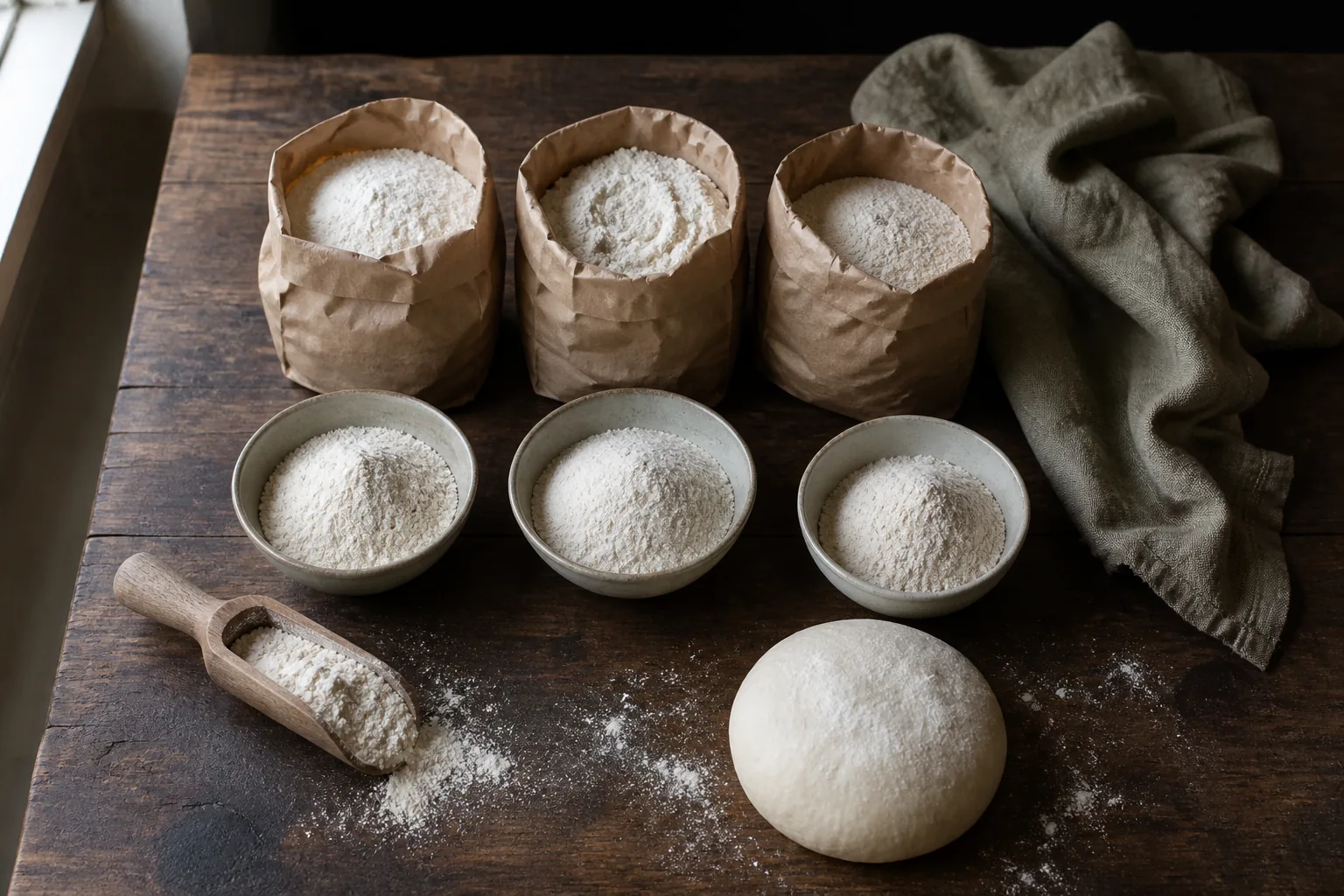
| Flour | When it fits | Check before choosing |
|---|---|---|
| All-purpose | Everyday home pizza when the recipe allows it. | Exact protein figure and the recipe's flour guidance. |
| Bread flour | Recipes aiming for a stronger, chewier or thicker crust. | Protein, fermentation plan and the maker's intended use. |
| 00 / Tipo 00 | Pizza recipes developed for a pizza-grade 00 flour, especially at high heat. | Product name, protein, W when supplied and oven guidance. |
| Whole-wheat / Type 85 | Recipes that deliberately include more of the grain. | Whether the recipe uses it alone or as part of a blend. |
| Semolina / durum | Recipes that name durum flour, or as a separate peel-dusting ingredient. | Whether the bag is intended for dough, pasta or dusting. |
All-purpose flour: the everyday pantry option
All-purpose flour is not a consolation prize. It can make good pizza when the recipe was written for it, and it keeps the first attempt simple because it is widely available. The catch is that all-purpose is a broad US category, not one fixed specification. Two brands can print different protein figures and behave differently in the same dough.
Choose it when a recipe calls for all-purpose, offers it as an option or is designed as an everyday home-oven dough. If the dough feels unlike the recipe description, check the exact bag before changing several other variables at once. Our guide to pizza flour protein content shows how to use the nutrition panel as a rough starting point.
Bread flour: when the recipe wants more strength
Bread flour is usually sold for yeast doughs and commonly publishes more protein than an everyday all-purpose flour from the same maker. That makes it a sensible starting point for recipes seeking a sturdier, chewier crust or enough structure for a thicker pan pizza. It is still a category, not a guarantee that every bag is interchangeable.
Protein is only the first clue. A mill may also publish an alveograph W value, which describes a separate dough test. Read the W value guide when that number appears rather than trying to convert it directly into protein.
00 flour: a type label, not a promise of perfect pizza
The two zeros belong to an Italian flour classification context. They do not set one protein percentage or mean that every 00 flour was made for the same recipe. A pizza-grade 00, a pasta flour and a stronger reinforced 00 can share the label while publishing different product details.
Choose a pizza 00 when the recipe names it or when the product maker's guidance fits the pizza and oven you are using. For the classification, substitutions and four real product examples, read what 00 flour means.
Whole-wheat, Type 85 and semolina have different jobs
Whole-wheat and higher-extraction flours retain more of the grain than a very white refined flour. That changes more than the label: recipes may use them for flavour and texture, often with their own water and mixing assumptions. Type 85 is a miller's product label seen on some higher-extraction flours; it is not a simple American counterpart to Italian type 00.
Semolina comes from durum wheat and may appear either in the dough or as a separate ingredient used to help a pizza release from the peel. Read the exact recipe and product description before treating those jobs as interchangeable. A bag sold for pasta, a durum pizza flour and coarse semolina are not automatically the same product.
Four flour labels from the product registry
Published products make the label differences easier to see. The table keeps each number attached to its exact bag; it is an example set, not a best-to-worst list.
| Product | Label | Protein | Another published field |
|---|---|---|---|
| King Arthur Professional Type '00' | Type 00 | 11.0% | Ash 0.54% |
| Caputo 00 Pizzeria | 00 pizza flour | 12.5% | W 260 to 280 |
| Central Milling Organic Type 85 | Type 85 | 12.5% | Ash 0.85% |
| Caputo Semolina Flour | Semolina / durum | 13% | W 230 to 250 |
Protein overlaps across these labels, while ash and W appear in different combinations. That is why choosing by a single percentage or type name can mislead. The 25-product flour registry keeps the remaining records and source links together.
Four numbers and labels you may see on a pizza flour bag
Once the flour type fits the recipe, the remaining fields help you compare exact products. You do not need every number for every purchase. Use the one that answers the decision in front of you.
- Protein is the easiest first filter for gluten-forming potential. It does not predict a finished crust by itself. See the protein comparison and label math.
- W comes from an alveograph dough test. P, L and P/L give the curve more meaning than W alone.
- Ash offers context about milling and refinement. Read the percentage with its reporting basis in the flour ash guide.
- Falling Number concerns enzyme activity and is usually a secondary field for a home shopper. The Falling Number explainer shows why lower and higher are not simple grades.
- Treatment wording is separate from flour type. If the question is potassium bromate, use the ingredient statement and our guide to spotting bromated flour.
A five-step way to choose a flour
- Start with the exact flour named by the recipe.
- If the recipe offers options, match the broad type: all-purpose, bread, 00 or another named flour.
- Check the product's stated use and published protein rather than the brand name alone.
- Use W, ash, Falling Number or treatment only when the field answers a real question you have.
- Change one thing at a time. A new flour, new hydration and new fermentation schedule make it hard to tell what helped.
The best flour for pizza dough is the one that fits the recipe and oven you are actually using. Once you have the category, browse the published flour specs to compare exact bags without assuming the label tells the whole story.